
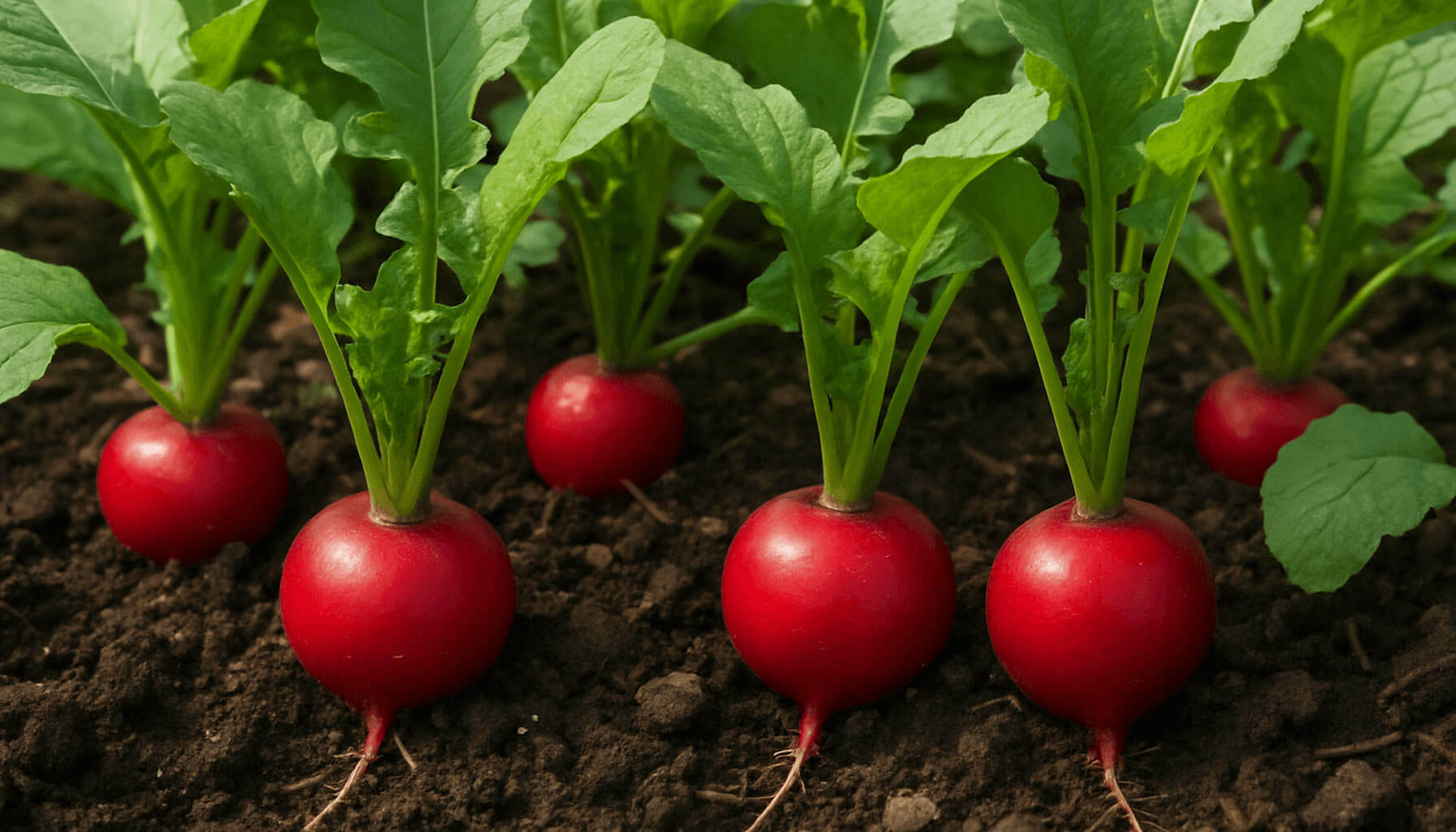
1. Why Grow Radishes?
If you’ve never grown veg before, radishes are the gardening equivalent of instant gratification. From seed to plate can be as little as four weeks — and the moment you pull one from the soil, still cool and crisp, you’ll see why they’re worth it.
They don’t take up much room either. You can squeeze them into spare corners of your veg patch, tuck them between slower-growing crops, or pop them in a pot on the patio. Their peppery crunch livens up salads, sandwiches, and stir-fries — and they roast surprisingly well too.
Children especially love growing them — you can practically watch them getting bigger every day.
2. When to Plant
In most parts of the UK, you can sow radishes from March through September.
- Early spring (March–April) – Sow mild salad varieties under fleece or in a cold frame if frost is still about.
- Late spring to summer (May–July) – Great for those classic small red radishes you see in supermarket salad bags.
- Late summer to early autumn (August–September) – Try winter radish varieties; bigger, spicier, and ideal for autumn crunch.
Top tip: Sow a short row every couple of weeks instead of all at once. This way, you’ll always have young, tender roots rather than a glut that turns woody.
3. Where to Grow
Radishes aren’t picky — they’ll thrive in:
- Full sun for the fastest growth.
- Light shade in midsummer to help prevent bolting.
- Beds, raised planters, large pots, or even window boxes.
They prefer light, well-drained soil. If you’ve got heavier clay, mix in compost or a bit of sharp sand. They also work brilliantly as a catch crop — growing quickly in the gaps between slower plants like parsnips, brassicas, or sweetcorn.
4. How to Sow
- Rake the soil until it’s fine and crumbly.
- Make a shallow drill about 1.5cm deep.
- Sow seeds thinly — too many in one spot just means more thinning later.
- Cover lightly with soil and water gently.
- For multiple rows, space them about 15cm apart.
In pots: Sow in shallow lines or scatter across the surface, cover lightly, and keep the compost evenly moist — containers dry out faster than beds.
Germination usually takes 4–7 days in spring warmth.
5. Looking After Them
- Thin seedlings when they’re about 2–3cm tall, leaving 3–4cm between plants.
- Keep the soil evenly moist. Dry spells can make them fiery and woody.
- Weed carefully to avoid disturbing the shallow roots.
- No feeding required — they grow too quickly to need it.
6. Common Problems (and Easy Fixes)
- Flea beetles – Tiny holes in leaves. Usually just cosmetic, but can slow young plants. Keep soil damp and cover seedlings with fine mesh.
- Bolting – Plants flower instead of making roots, usually due to hot, dry weather. Sow in partial shade and water regularly.
- Woody roots – Caused by leaving them too long or irregular watering. Best to pull them young and crisp.
7. Harvesting
Most salad radishes are ready 3–6 weeks after sowing. You’ll often see the tops of the roots peeping above the soil — plump and brightly coloured.
Pull one to test — it should be crisp and firm. Don’t hang about once they’re ready; radishes can go from perfect to spongy almost overnight.
8. My Quick Tips
- Sow little and often for a constant supply.
- Radish leaves are edible — young ones are lovely in salads, older ones can be wilted like spinach.
- Great companion plants for carrots and lettuce — they grow fast and help deter certain pests.