
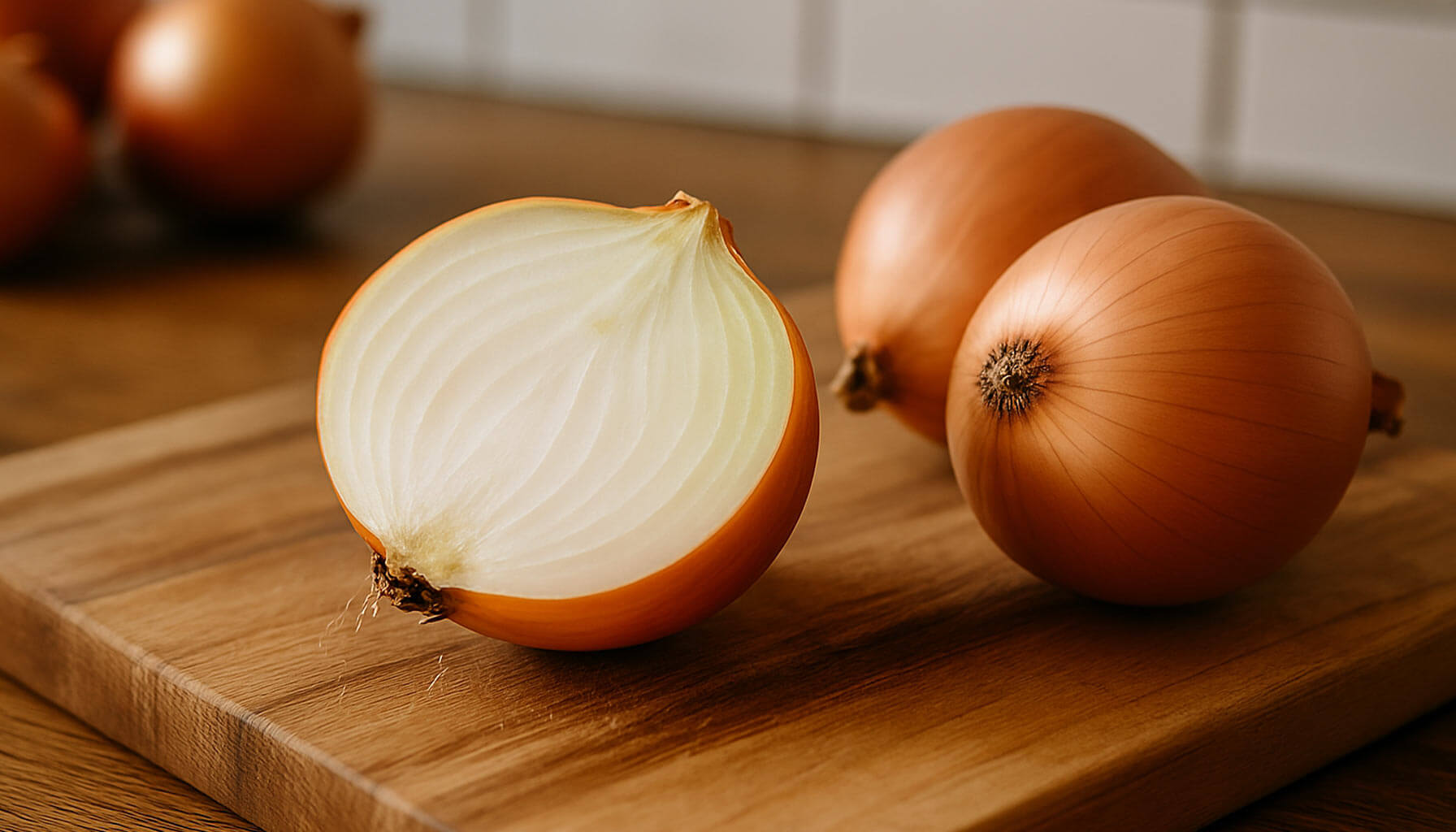
Onions are a true staple in the British kitchen. Whether it’s a comforting stew in winter or a crisp summer salad, chances are you’ve reached for an onion. And the best bit? They’re one of the easiest crops to grow, whether you’ve a full allotment, a raised bed, or just a couple of patio pots. I’ve grown onions for years in my East Midlands patch, and while they don’t always grab the headlines like tomatoes or chillies, they quietly get on with it and reward you handsomely. Let’s dig in.
Planning & Choosing the Right Onion
Before you start, it’s worth knowing that onions respond to day length — the amount of daylight they get.
- Short-day onions – Bulb up with 10–12 hours of daylight. Suited to warmer, southern regions (rarely grown in the UK).
- Intermediate-day onions – Need around 12–14 hours. Can grow in the milder southern parts of the UK.
- Long-day onions – Require 14–16 hours of daylight. These are the most reliable in the UK climate, especially in the north. For most UK growers, long-day varieties are your safest bet.
Growing Methods: Sets, Seeds & Kitchen Scraps
You can grow onions in three ways:
- Onion Sets – Small, partly grown onions. The easiest option for beginners. Plant them, and they’ll grow into full bulbs.
- Seeds – Cheaper, with more variety available. A bit fiddlier and slower, but satisfying if you like growing from scratch.
- Kitchen Scraps – That sprouting onion at the back of your veg basket can be replanted. Fun for children and experiments, but you won’t usually get a decent-sized bulb.
When to Plant Onions
- Spring planting – Sow seeds in January–March indoors, or plant sets outdoors in March–April.
- Autumn planting – Certain varieties can be planted in September–October for an early summer harvest. These will need a sunny, well-drained site to avoid rotting in winter. Tip: Avoid planting onions straight after other alliums (garlic, leeks) to reduce disease risks.
Preparing Your Site
Onions like:
- Full sun – at least 6–8 hours of sunlight daily.
- Well-drained soil – they hate sitting in water.
- Soil pH – neutral to slightly alkaline (pH 6.5–7.5). Improve heavy clay with compost or sharp sand. If you’re on sandy soil, add organic matter to retain moisture. Raised beds work brilliantly in wetter areas. Follow crop rotation: avoid planting onions in the same spot two years running.
Onion Varieties for the UK
A few reliable favourites:
- Sturon – Classic maincrop, stores well.
- Red Baron – Deep red, great for salads.
- Hercules – Strong-growing, good yields.
- White Lisbon – Spring onion type, quick and reliable.
- Shallots (Golden Gourmet, Longor) – Easy to grow, excellent flavour.
Growing in Pots & Indoors
Yes, you can grow onions in containers. Use:
- A pot at least 20–25cm deep.
- Multi-purpose compost mixed with grit for drainage.
- Plant sets 10cm apart. Spring onions are particularly well-suited to pots, and you can even grow them on a sunny windowsill.
Watering, Feeding & General Care
- Watering – Keep soil evenly moist, especially in dry spells. Don’t overwater once bulbs start swelling.
- Feeding – Use a nitrogen-rich fertiliser in early growth. Switch to a potash-rich feed when bulbs begin to form.
- Weeding – Onions dislike competition. Weed by hand to avoid damaging shallow roots. Mulching with compost or grass clippings can help retain moisture and suppress weeds.
Pests & Problems
A few common issues:
| Problem | Symptom | What to Do |
|---|---|---|
| Onion Fly | Yellow, wilting plants | Use fleece, avoid affected soil |
| White Rot | Yellowing leaves, white fungus at the base | No cure – avoid replanting alliums there |
| Bolting | Flower stalks appear | Remove flower stalks, use bolt-resistant varieties |
Harvesting, Curing & Storing
- Harvesting – Onions are ready when leaves yellow and flop over (July–September).
- Curing – Lift bulbs and dry them in the sun (or a greenhouse/shed if wet) for 2–3 weeks.
- Storing – Once skins are papery, store in nets, trays, or plait them into ropes. Keep in a cool, dry place — they’ll last for months.
Companion Planting & Rotation
Good neighbours for onions include:
- Carrots – help deter onion fly (and onions deter carrot fly).
- Beetroot & Lettuce – easy companions. Avoid planting with peas and beans — they don’t get along.
Common Questions
Do onions need lots of space?
Not really. Even small gardens can grow a row or two. Can I regrow onions from scraps?
You’ll get green shoots, not usually big bulbs. How long do onions take to grow?
Sets: around 3–4 months. Seeds: 5–6 months. Do I need to water them in winter?
No, winter rain is usually plenty.
Final Thoughts
Onions are steady, unfussy, and endlessly useful. Pop a few sets in each spring (and autumn if you fancy an early crop), and you’ll never be short of onions in the kitchen. Once you’ve grown your own, even the humble fried onion tastes that little bit sweeter.