
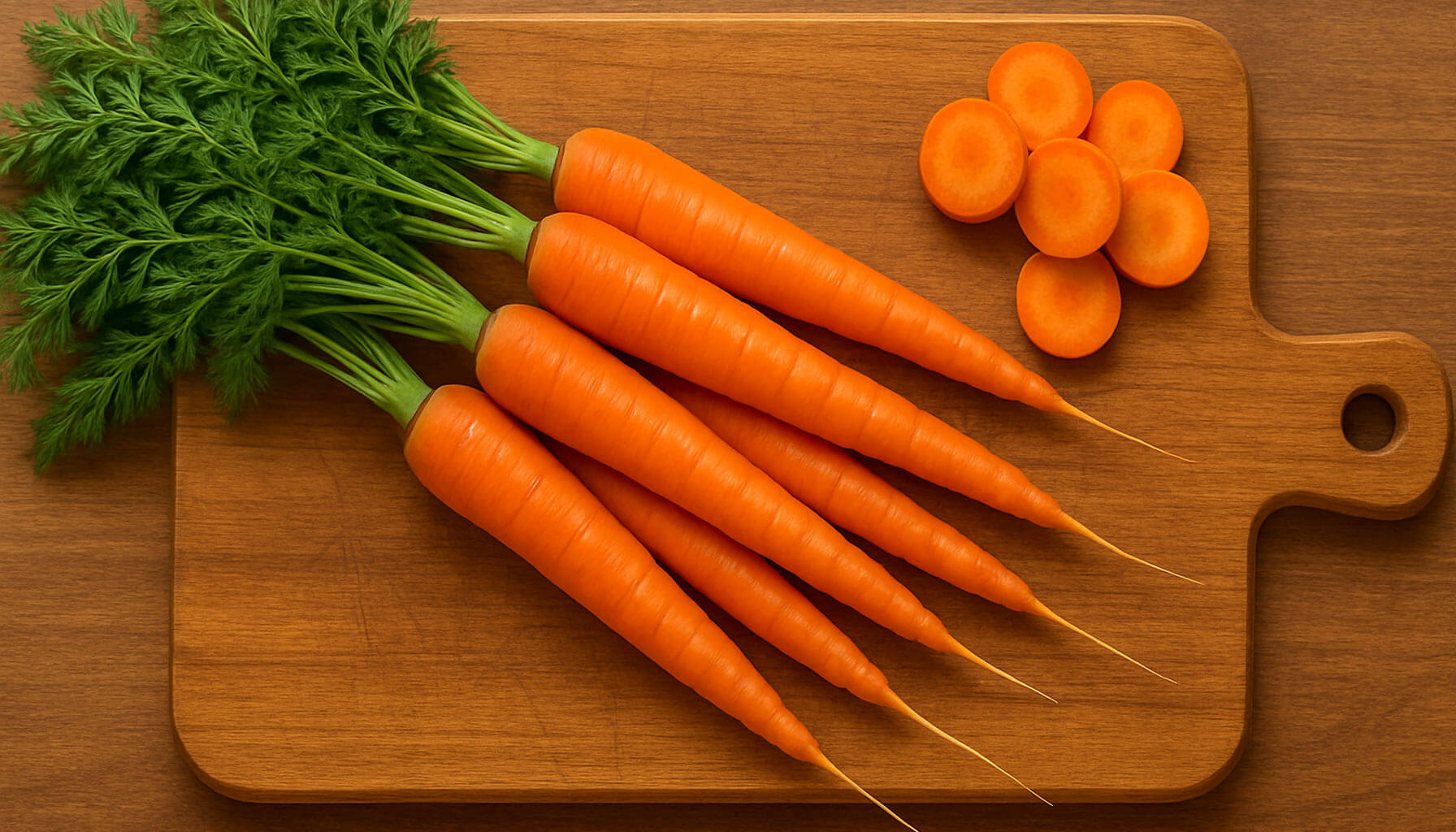
Carrots are one of those veg we all take for granted — a bag’s always cheap enough in the supermarket. But grow your own, and you’ll quickly realise just how sweet, crisp and colourful they can be. They’re not difficult once you know a few tricks, but beginners often stumble on things like forked roots or carrot fly. With the right soil and a bit of patience, you can pull up a steady crop of fresh carrots from spring right through to autumn.
Can You Really Grow Carrots from a Carrot?
Let’s start with a common myth. You can’t grow a brand-new carrot root from a shop-bought carrot. What you can do is regrow the leafy tops if you stick the stump in water — fun for the kids, and the greens are edible in salads or pesto. But if you want a proper crop, you’ll need to sow carrot seeds.
Quick Reference: Carrot Sowing at a Glance
- Best sowing time: March–June (under cover in March/April)
- Soil type: Light, sandy, stone-free
- Sowing depth: 1cm
- Row spacing: 15–20cm apart
- Thin seedlings: 5–8cm apart
- Harvest time: 10–16 weeks depending on variety
When and Where to Plant Carrots in the UK
Carrots like cool, steady conditions, so timing is everything.
- Best months: Sow outdoors from March to June. Early sowings (March/April) benefit from cloche protection. For a late crop, some varieties can go in up to July.
- Soil: They prefer light, sandy soil free from stones. Heavy clay or freshly manured ground will give you twisted, forked roots.
- Where: They do best in open ground, raised beds, or deep containers (at least 30cm deep). Windowsill pots aren’t quite roomy enough.
Are Carrots Hard to Grow? The Tricks You Need to Know
Carrots are straightforward once you respect a couple of golden rules:
- Sow directly where they’ll grow — carrots hate being transplanted.
- Keep soil loose and fine, so seedlings can push straight down.
- Don’t add fresh manure or compost high in nitrogen — it makes roots split.
- Cover with fleece or fine mesh to keep off carrot fly.
Follow those, and you’re halfway there.
Spacing, Growth, and Yields
- Sow seeds 1cm deep in shallow drills, rows about 15–20cm apart.
- Carrots germinate slowly (2–3 weeks), so be patient.
- Once seedlings are about 2–3cm tall, thin them to 5–8cm apart. This feels brutal but gives each root room to grow.
- One seed = one carrot. You won’t get bunches from a single plant.
- Harvest times vary: early varieties in 10–12 weeks, main crops in 14–16 weeks.
Quick Reference: Feeding & Watering
- Watering: Once a week in dry spells; avoid light daily sprinkles.
- Fertiliser: Low-nitrogen, balanced feed if needed.
- Avoid: Fresh manure, high-nitrogen feeds (too much leafy growth).
Watering and Feeding
Carrots don’t need loads of water, but they like consistency.
- Watering: A good soak every week in dry spells is better than a light sprinkle every day. Irregular watering causes roots to crack.
- Feeding: They’re not greedy feeders. Use a balanced fertiliser low in nitrogen if needed. Avoid high-nitrogen feeds — they give you big leafy tops and poor roots.
- Coffee grounds, eggshells, banana peels? Coffee grounds can slightly improve soil texture, eggshells add very little unless well broken down, and banana peels don’t do much for carrots. Better to stick with proper compost or fertiliser.
Companion Planting and What to Avoid
Carrots get on well with onions, leeks, and rosemary — their strong scents help confuse carrot fly.
Avoid planting near parsnips (they attract similar pests) or dill (which competes too much).
Troubleshooting: Common Carrot Problems
Forked roots
- Cause: Stones, heavy soil, or fresh manure.
- Fix: Use fine, sandy soil and avoid manuring just before sowing.
Carrot fly
- Cause: Low-flying pests attracted by carrot scent, especially when thinning.
- Fix: Sow thinly, cover with fleece, or grow in raised beds over 60cm tall.
Cracked carrots
- Cause: Uneven watering.
- Fix: Keep soil evenly moist.
Bolting (running to seed)
- Cause: Hot, dry weather.
- Fix: Keep watered, harvest promptly.
Harvesting and Storing Carrots
You’ll know they’re ready when the shoulders of the carrot push slightly above the soil.
- Loosen the soil with a fork and gently pull — yanking can snap the roots.
- Early carrots are best eaten fresh.
- Maincrop varieties can be stored in damp sand or boxes in a cool shed, lasting you well into winter.
Conclusion
Carrots are one of the most satisfying crops for the beginner gardener. Start with good soil, sow thinly, keep them watered, and protect against carrot fly, and you’ll be rewarded with crisp, sweet roots that taste far better than anything in a plastic bag. Once you’ve grown your own, you’ll never look at supermarket carrots the same way again.