
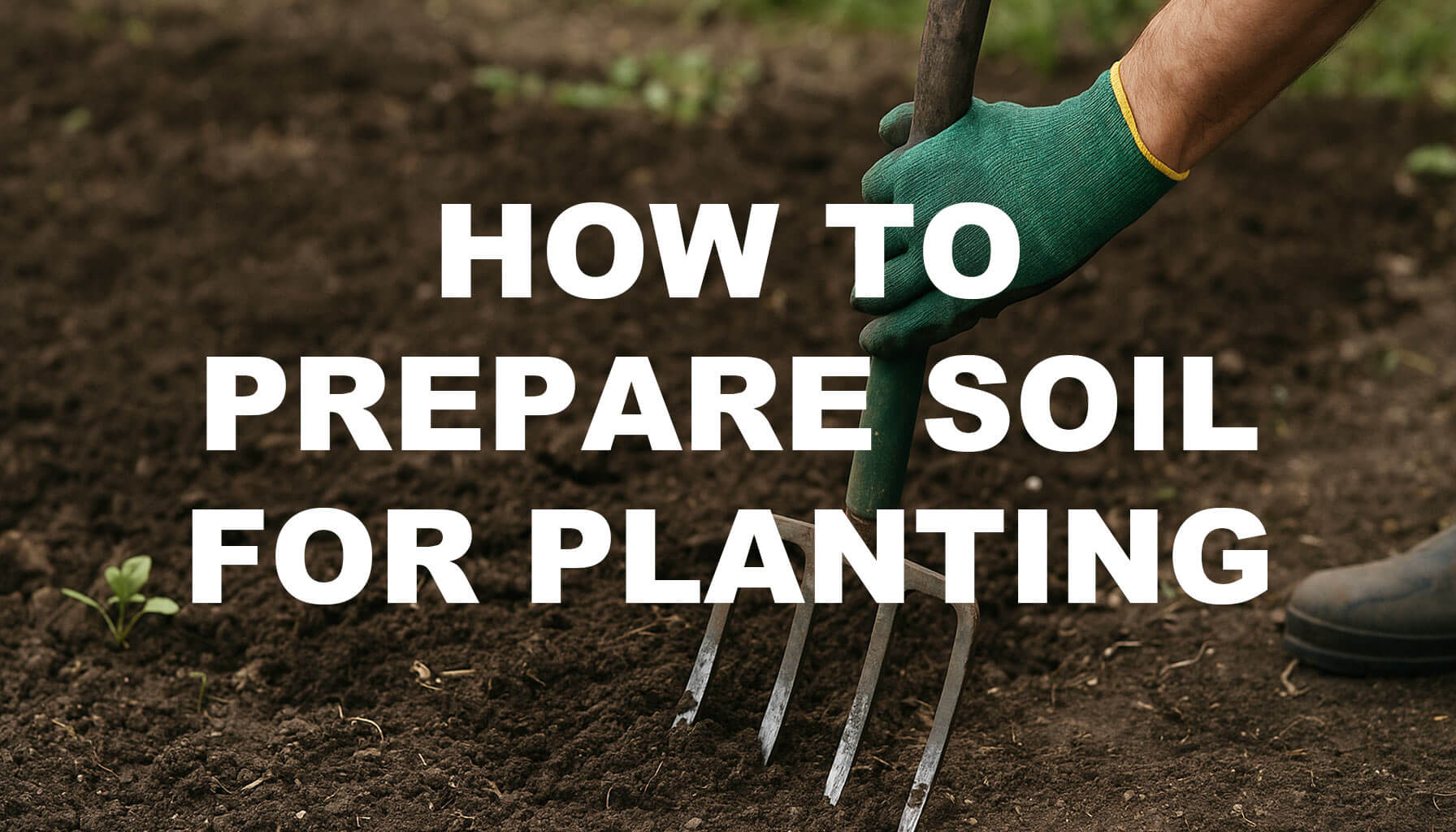
Why Good Soil Matters
Before you sow a single seed or plant a plug, it’s worth spending a bit of time getting your soil in shape. Healthy soil is the quiet engine behind every thriving garden — it stores water, holds nutrients, and gives roots room to breathe.
Whether you’ve inherited a patch of heavy East Midlands clay or something that looks more like builders’ sand, the good news is this: every soil can be improved. It just takes a bit of understanding and some steady preparation.
Autumn and early spring are the best times to get started, when the soil’s damp but not sticky, and before planting gets busy.
All you really need are the basics: a spade, fork, and rake, plus a pair of decent gloves and a mug of tea nearby.
Know Your Soil
Before doing anything drastic, get to know what you’re working with. You can learn a lot just by handling it.
- Clay soil – dense, sticky when wet, cracks when dry. Rich in nutrients but benefits from organic matter and grit.
- Sandy soil – light and quick-draining, often low in nutrients. Add compost to help it hold moisture.
- Loam – the gardener’s dream: crumbly, fertile, and easy to work.
- Chalky or lime-rich soil – pale and stony; drains well but tends to be alkaline.
Try this simple squeeze test: pick up a handful of damp soil.
- If it moulds together easily, it’s clay.
- If it falls apart, it’s sandy.
- Something in between, that’s loam.
A quick pH test is also useful. Most crops prefer soil that’s slightly acidic to neutral (around pH 6–7).

Clearing and Preparing the Ground
Start by removing weeds, old roots, and debris. Perennial weeds such as dock, couch grass, and bindweed need to be dug out completely — any bits left behind will grow again.
Don’t work the soil when it’s soaked. You’ll compact it, leaving clods that take weeks to recover. Wait until it’s moist and crumbly — if it breaks apart in your hand rather than squelching, it’s ready.
Once cleared, rake off stones and flatten any bumps. If you’re setting up new beds, mark out permanent paths to stop yourself from walking on the soil later.
Dig or No-Dig?
Here’s where gardeners like a good debate.
Traditional digging means turning the soil to loosen it and mix in compost or manure. It’s handy for compacted or neglected plots.
- Single digging: one spade deep — enough for most veg beds.
- Double digging: two spades deep — heavy work but good for poor or waterlogged soil.
The no-dig method skips all that. Instead, spread a thick layer (5–10 cm) of compost or well-rotted manure on the surface and let worms and microbes pull it down naturally.
No-dig saves your back, keeps soil life intact, and reduces weeds — ideal for raised beds or smaller gardens.
Feeding and Improving the Soil
Whatever your soil type, organic matter is the magic ingredient. It’s what keeps soil alive and productive.
- Compost – homemade or bagged, adds nutrients and improves texture.
- Well-rotted manure – adds richness; make sure it’s aged for at least a year.
- Leaf mould – fantastic for holding moisture in light soils.
- Green manures – fast-growing plants such as clover or field beans that feed the soil when dug in or left to rot down.
Spread a 5 cm layer over the surface. You can dig it in if you’re using the traditional method, or leave it on top if you’re going no-dig. Either way, your soil will thank you.
Finishing Off: Raking, Levelling, and Letting It Settle
Once the soil’s been improved, smooth things over with a rake. Break down clods, remove stones, and aim for a level surface.
For sowing seeds, create a fine tilth — a crumbly top layer where seeds can settle snugly. Leave freshly dug soil for a week or two before planting so it can settle naturally.
Avoid standing on your beds; use a plank if you must step in. One misplaced boot can undo all your good work.
Tips & Common Mistakes
- Work when soil is damp, not wet or bone dry.
- Add organic matter every year — little and often keeps soil fertile.
- Don’t over-fertilise; rich compost is enough for most crops.
- Mulch bare soil in winter to protect it from heavy rain and frost.
- Use paths or boards to stop compaction.
Healthy soil isn’t made in a day — it’s built season by season. Treat it well, and it’ll repay you with strong plants and fewer problems.
Conclusion: Ready to Plant
Once your soil’s prepared, you’ve set the stage for success. Seeds germinate faster, roots grow deeper, and watering becomes easier because moisture stays where it should.
So take the time now — test, clear, feed, and level. It’s the quiet groundwork that pays off all season long.
As I like to say here in the East Midlands: look after your soil, and it’ll look after you.
Quick Soil Prep Checklist
Test & Observe
✔ Identify soil type and pH
✔ Check drainage
Clear & Clean
✔ Remove weeds, roots, debris
✔ Work soil only when damp
Improve & Feed
✔ Add compost, manure, or leaf mould (5 cm layer)
✔ Choose dig or no-dig
Level & Finish
✔ Rake to a fine tilth
✔ Let soil settle a week or two
✔ Keep off freshly prepared beds
Maintain & Protect
✔ Top up compost each year
✔ Mulch over winter
✔ Use paths or boards to prevent compaction