
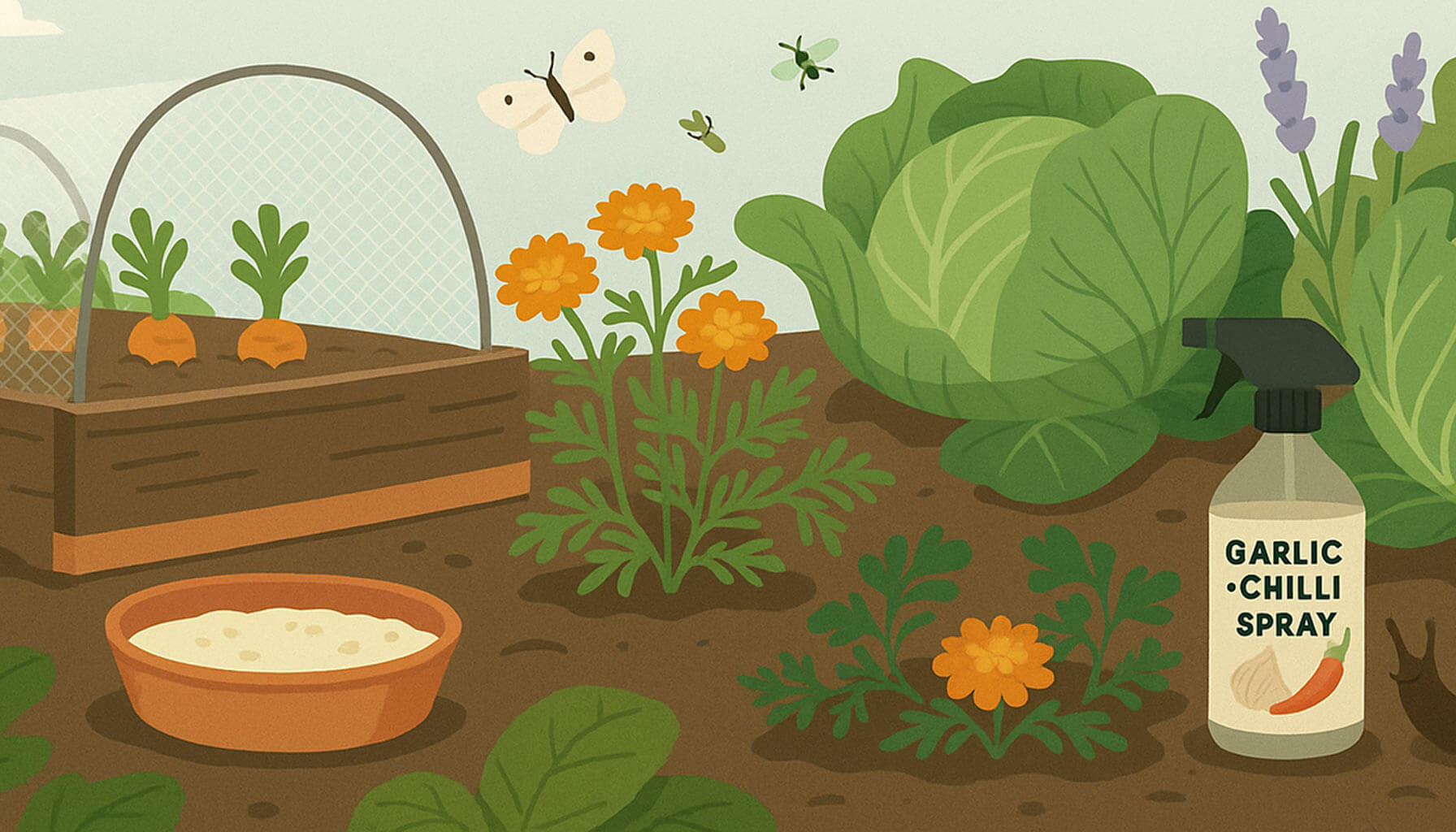
Few things test a gardener’s patience like finding your lettuces full of holes or your cabbages reduced to skeletons overnight. It’s all part of the deal when you share your garden with nature — but that doesn’t mean you have to surrender your harvest.
The challenge is simple: keep your veg safe without harming the good insects, soil life, and birds that make a garden thrive. Chemical sprays can seem like an easy fix, but they wipe out everything in their path, good and bad. Thankfully, there are plenty of natural, low-cost ways to keep pests in check — and they often work better in the long run.
Think of it as creating balance. A healthy, diverse garden tends to look after itself. A few holes in a leaf here and there aren’t the end of the world — but if you keep your soil lively, your plants strong, and your wildlife welcome, you’ll find pest outbreaks become fewer and shorter every season.
Know Your Garden Pests
Before you can deal with them, it helps to know who’s causing the mischief. Different bugs leave different calling cards:
- Aphids (greenfly and blackfly): cluster on soft tips, leaving sticky residue.
- Slugs and snails: chew ragged holes and leave silvery trails.
- Caterpillars: cabbage whites and moth larvae strip brassicas bare.
- Flea beetles: tiny holes in rocket and radish leaves.
- Vine weevils: adults nibble leaves; grubs eat roots in pots.
A quick look under leaves once a week helps spot problems early — the best time to act.
Natural Prevention Methods
Healthy soil = healthy plants
Strong plants fend off pests better. Feed your soil with compost, rotate crops yearly, and mulch to conserve moisture and encourage worms.
Physical barriers
Barriers are simple but effective:
- Fine mesh or fleece: keeps out cabbage whites and carrot flies.
- Copper tape: deters slugs from pots.
- Beer traps: lure slugs away from crops.
Check regularly for gaps or tears — persistence pays off.
Companion planting
Nature provides handy partnerships:
- Marigolds deter aphids, attract hoverflies.
- Basil repels whitefly.
- Chives protect carrots.
- Nasturtiums lure caterpillars away from cabbages.
Mixing crops also confuses pests and limits damage spread.
Garden hygiene
Clear old leaves, avoid overcrowding, and water early so foliage dries by night. Small habits like these cut pest numbers dramatically.
Homemade and Natural Sprays
Garlic & Chilli Spray
Blend 3 garlic cloves and 2 chillies in 1 litre of water, strain, and add a few drops of washing-up liquid. Spray lightly on leaves to repel aphids and caterpillars.
Soapy Water Spray
Mix 1 tsp mild washing-up liquid per litre of water. Spray on aphids or whitefly, then rinse after a few hours.
Neem Oil Spray
Mix according to bottle instructions — a gentle, natural deterrent that interrupts pest growth cycles.
Tip: Test any spray on a small area first, and avoid hot sunny days.
Cinnamon & Hot Pepper Notes
Cinnamon discourages mould and ants but won’t stop slugs. Hot pepper sprays can deter pests, but strong mixtures may scorch leaves — be cautious.
Herbs and Plants That Repel Bugs Naturally
Herbs are your allies — fragrant, useful, and confusing to pests.
- Rosemary: deters carrot fly and cabbage moths.
- Lavender: repels whitefly, attracts pollinators.
- Coriander & dill: attract ladybirds and hoverflies.
- Thyme & sage: mask brassica scent.
Interplant herbs among vegetables for natural protection and a good-looking plot.
Other Natural Defences
Encourage garden wildlife
Nature’s pest control works for free.
- Ladybirds and lacewings: devour aphids.
- Birds: enjoy caterpillars and beetles.
- Frogs and hedgehogs: feast on slugs and snails.
Provide water, shelter, and flowering plants, and they’ll return the favour.
Folk remedies — fact or fiction
- Coffee grounds: slightly deter slugs, improve soil texture.
- Eggshells: not very effective, but harmless to try.
- Beer traps: tried and tested slug catchers.
Use these as supporting acts, not leading roles.
Harvest Hygiene
Even the best-defended garden gets a few stowaways. Soak harvested veg in cool water with a splash of vinegar or salt for 5–10 minutes, then rinse. It removes bugs and residue without any fuss.
Final Thoughts
Natural pest control isn’t about perfection — it’s about partnership. By using barriers, herbs, homemade sprays, and a bit of wildlife encouragement, you’ll create a garden that’s vibrant, balanced, and chemical-free.
A few nibbles are a small price for home-grown food that’s safe for your family and the environment. Be patient, stay observant, and trust that nature, given half a chance, usually sorts itself out.
🌱 Quick Reference Table: Common Pests & Natural Solutions
| Pest | Tell-tale Signs | Natural Remedies | Helpful Allies |
|---|---|---|---|
| Aphids (Greenfly, Blackfly) | Sticky residue, curled leaves | Soapy water, garlic/chilli spray, marigolds | Ladybirds, hoverflies |
| Slugs & Snails | Holes in leaves, slime trails | Beer traps, copper tape, hand-pick at dusk | Frogs, toads, hedgehogs |
| Caterpillars (Cabbage White) | Ragged brassica leaves | Netting, nasturtiums as decoy, garlic spray | Birds, parasitic wasps |
| Flea Beetles | Tiny holes in rocket/radish | Fleece cover, moist soil, interplanting | Ground beetles |
| Vine Weevils | Wilting in pots, root damage | Nematodes (biological control), repotting | Birds, predatory beetles |
| Whitefly | Cloud of small white insects when disturbed | Soapy spray, lavender nearby | Hoverflies |
| Carrot Fly | Rusty tunnels in carrots | Fine mesh, chive/onion companions | Parasitic wasps |
| Ants | Nesting near aphids | Cinnamon dusting, disrupt nests | N/A (control aphids instead) |