
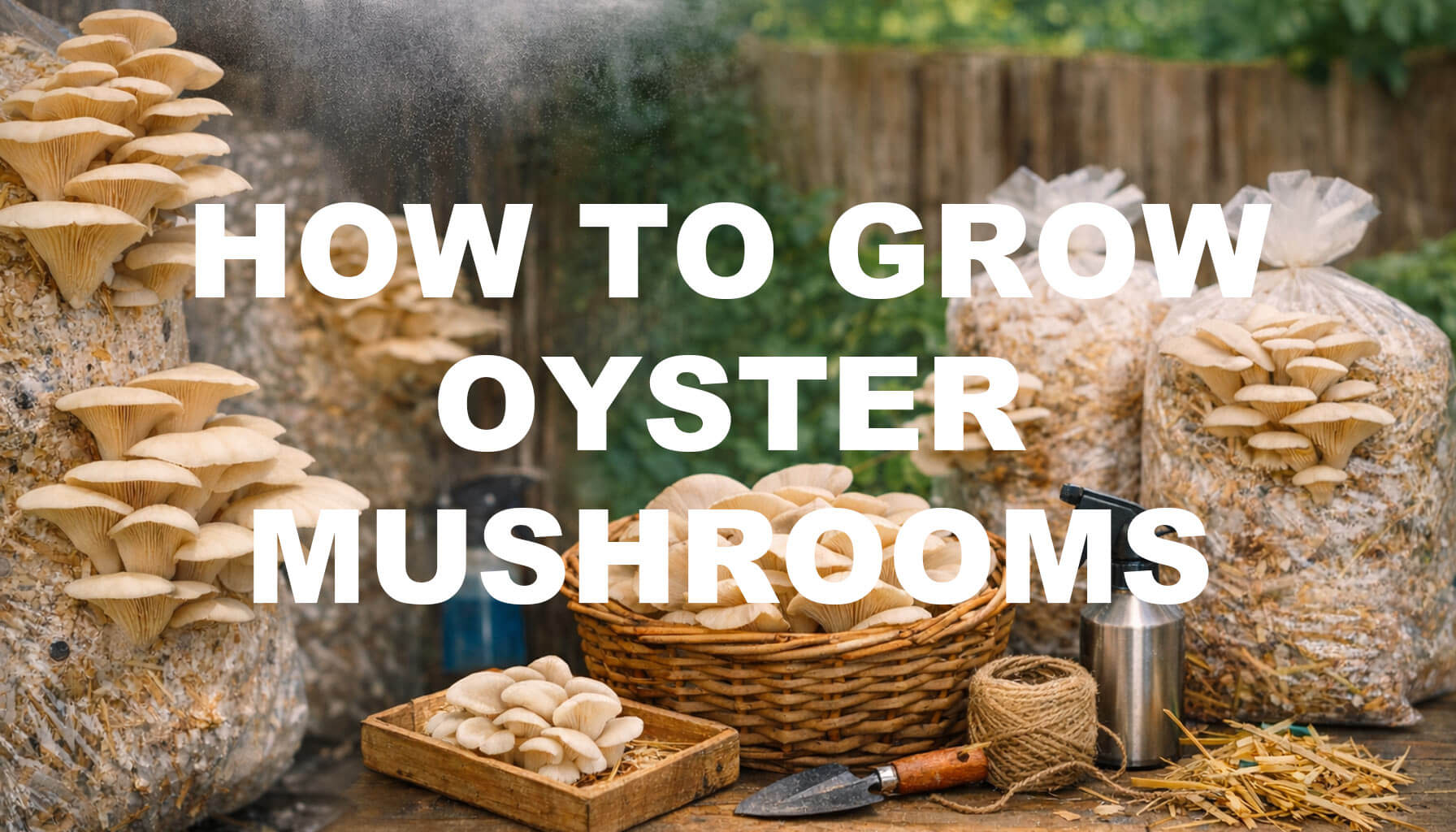
Oyster mushrooms are, without exaggeration, one of the easiest and most reliable foods you can grow at home in the UK. If you’ve ever felt slightly intimidated by the idea of growing fungi, you’re not alone. Many beginners imagine laboratories, sterile gloves and complicated compost formulas.
In reality, oyster mushrooms are far more forgiving than most vegetables. They don’t need sunlight. They don’t need feeding. They don’t even need soil. What they do need is moisture, fresh air and a bit of patience.
Whether you’ve got a small flat with a spare shelf, a cool garage, or a shaded garden corner, you can grow oysters successfully. Let’s go through it properly, in detail, so you understand not just what to do — but why you’re doing it.
Why Oyster Mushrooms Are Perfect for UK Growers
Oyster mushrooms (Pleurotus species) are particularly well suited to our British climate.
Firstly, they prefer cooler temperatures. While tomatoes sulk below 15°C, many oyster varieties are perfectly happy fruiting between 10–18°C. That makes spring and autumn ideal — and even winter indoor growing very achievable.
Secondly, they grow quickly. From mixing spawn into straw to harvesting your first flush can take as little as 2–3 weeks under good conditions.
Thirdly, they are aggressive colonisers. That means once the mycelium gets established, it spreads strongly through the growing material, reducing the chance of contamination compared with fussier species.
And finally, they grow on simple waste materials — straw, sawdust, even used coffee grounds. No manure composting required.
For a beginner, all of that adds up to one thing: visible results without endless complications.
Choosing the Right Oyster Variety for the UK
There are several oyster varieties available from UK suppliers. The differences mainly relate to temperature tolerance and appearance.
Grey Oyster (Pleurotus ostreatus)
This is the classic oyster mushroom and the one I recommend to beginners.
It thrives in temperatures between 10–20°C, making it suitable for:
- Spring indoor growing (March–May)
- Autumn indoor or outdoor growing (September–November)
- Winter indoor growing in a cool room
It produces attractive grey-brown caps with good flavour and tends to fruit reliably.
If you choose only one variety for your first attempt, make it this one.
Blue Oyster
Blue oysters are slightly more cold tolerant and can fruit at temperatures as low as 8–10°C.
They’re ideal for:
- Unheated sheds
- Garages in winter
- Early spring growing
They often produce thick, meaty caps in cooler air.
Pink Oyster
Pink oysters require warmth — typically 18–30°C — and struggle below 15°C.
In the UK, they’re best grown:
- Indoors during June–August
- In a warm kitchen or utility room
They are fast growing and visually striking, but the flavour is milder and they don’t keep long once harvested.
King Oyster
King oysters produce thick stems and smaller caps. They prefer steady temperatures around 15–20°C and slightly more careful humidity management.
They’re better attempted once you’ve successfully grown grey oysters.
When to Grow Oyster Mushrooms in the UK
Although you can grow oysters year-round indoors, success becomes much easier when you work with the seasons rather than against them.
January–March
Ideal for indoor growing with grey or blue oysters.
Central heating can dry the air considerably, so you may need to mist more frequently or grow in a slightly cooler room away from radiators.
April–May
Excellent conditions. Temperatures are naturally within the fruiting range and humidity tends to be reasonable. This is one of the easiest times for beginners.
Outdoor shaded growing becomes viable in late April.
June–August
Grey oysters will still grow, but high temperatures (above 22°C) can slow fruiting.
Pink oysters perform best during this period if grown indoors. Outdoors, ensure full shade and protect from drying winds.
September–November
Arguably the best oyster season in the UK. Cool nights naturally trigger fruiting, and humidity levels are generally favourable.
Sheds, garages and shaded garden spots work beautifully.
December
Indoor growing only unless you have a very mild winter. Stick with cold-tolerant varieties.
What You Need to Get Started
Growing oysters doesn’t require specialist equipment, but cleanliness and preparation matter.
Oyster Mushroom Spawn
Spawn is grain that has been fully colonised by oyster mycelium.
When you open a fresh bag of spawn, it should:
- Be evenly covered in white mycelium
- Smell pleasantly earthy, like fresh mushrooms
- Have no green, black, yellow or slimy patches
If you see coloured mould or detect a sour smell, discard it. Poor spawn leads to frustration.
Substrate Options
For beginners, these are the most practical choices:
Straw (Best Beginner Option)
Cheap, widely available, easy to prepare and very forgiving.
Hardwood Sawdust Pellets
Clean and consistent. Simply hydrate with boiling water and cool before adding spawn.
Coffee Grounds
Possible, but riskier for beginners because contamination happens more easily.
If you’re starting out, use straw.
Basic Equipment
- Large bucket or storage box
- Kettle or large saucepan
- Clean knife
- Spray bottle
- Strong plastic growing bags (or clean bin liners)
You don’t need expensive kit to begin.
Step-by-Step: Growing Oyster Mushrooms on Straw
This is the most reliable method for UK home growers.
Step 1 – Preparing and Pasteurising the Straw
Straw naturally contains other fungi and bacteria. Pasteurising reduces these competitors without needing laboratory sterility.
- Chop straw into pieces roughly 3–5cm long. This increases surface area and makes packing easier.
- Place in a large bucket.
- Pour boiling water over until fully submerged.
- Cover and leave for one hour.
- Drain thoroughly.
The correct moisture level is crucial. When squeezed firmly, the straw should release only a few drops of water — not a steady stream.
Too wet and you risk rot. Too dry and the mycelium struggles to spread.
Step 2 – Mixing in the Spawn
Wait until the straw cools to room temperature.
Break the spawn up into small pieces and mix evenly through the straw at around 5–10% spawn by weight. More spawn usually means faster colonisation.
Pack firmly into a growing bag. Remove large air pockets but don’t compress it into a solid block.
Cut or poke small holes (around 1cm) every 10–15cm across the bag.
Step 3 – Incubation (Colonisation Phase)
Place the bag somewhere:
- 18–22°C ideally
- Out of direct sunlight
- Undisturbed
Over 7–14 days, white mycelium will spread until the straw is fully colonised.
If you notice green mould during this stage, discard the bag immediately. Do not attempt to salvage it.
Step 4 – Triggering Fruiting
Once fully white, introduce fruiting conditions:
- Move to a slightly cooler area (10–18°C depending on variety)
- Increase airflow
- Maintain high humidity
Light misting once or twice daily around the bag (not soaking it) is usually sufficient.
Within 3–7 days, tiny pinheads will form. These grow rapidly — often doubling in size daily.
Step 5 – Harvesting Properly
Harvest when the caps have opened but before the edges curl upward.
Use a clean knife and cut the whole cluster at the base.
Avoid pulling, as this can damage the remaining mycelium and reduce future flushes.
Indoor vs Outdoor Growing in the UK
Growing Indoors
Advantages:
- Greater control over temperature
- Protection from heavy rain
- Year-round possibility
Ideal spaces include spare rooms, garages, cupboards with airflow, and utility rooms.
Avoid placing bags directly next to radiators or in sealed, stagnant spaces.
Growing Outdoors
Best months: April–June and September–October.
Place bags:
- In full shade
- Against a north-facing fence
- Under shrubs or trees
Protect from heavy rainfall by placing under a small overhang or improvised cover.
Outdoor growing benefits from natural airflow but may require monitoring during dry spells.
Creating the Right Conditions
Temperature
Incubation: 18–22°C
Fruiting: 10–18°C (variety dependent)
Cooler fruiting temperatures often result in thicker caps and better texture.
Humidity
Aim for 70–90% humidity.
Signs of low humidity:
- Small caps
- Cracked edges
- Stunted growth
Misting the surrounding air and the bag surface lightly is usually enough. Avoid soaking the substrate.
Airflow
Oysters need oxygen.
Long stems with tiny caps indicate stale air. Increase ventilation slightly by opening a window briefly or moving to a more open space.
Common Problems and How to Fix Them
Green Mould
Cause: Contamination from unclean straw or poor spawn.
Solution: Discard and improve pasteurisation next time.
Long Stems, Small Caps
Cause: Insufficient airflow.
Solution: Improve ventilation.
Dry or Cracked Caps
Cause: Low humidity.
Solution: Increase misting frequency.
No Fruiting After Full Colonisation
Cause: Too warm or insufficient fresh air.
Solution: Move to a cooler area and increase airflow.
Getting Multiple Flushes and Yield Expectations
After the first harvest, the block will rest.
Continue light misting and keep conditions steady. A second flush usually appears within 7–14 days.
Most home growers achieve 2–3 flushes from one straw bag.
A typical 5kg straw bag may produce 500g–1kg of mushrooms in total across all flushes.
Once production slows, the spent substrate makes excellent compost or mulch for the garden.
Final Thoughts
Oyster mushrooms are one of the most beginner-friendly crops you can grow in Britain.
They suit our cool seasons. They require minimal space. And they reward you quickly.
Start in spring or autumn if possible. Focus on moisture and airflow. Keep things clean but don’t overcomplicate it.
Once you harvest your first cluster, the process feels far less mysterious — and you may find yourself planning the next batch before the frying pan has cooled.