
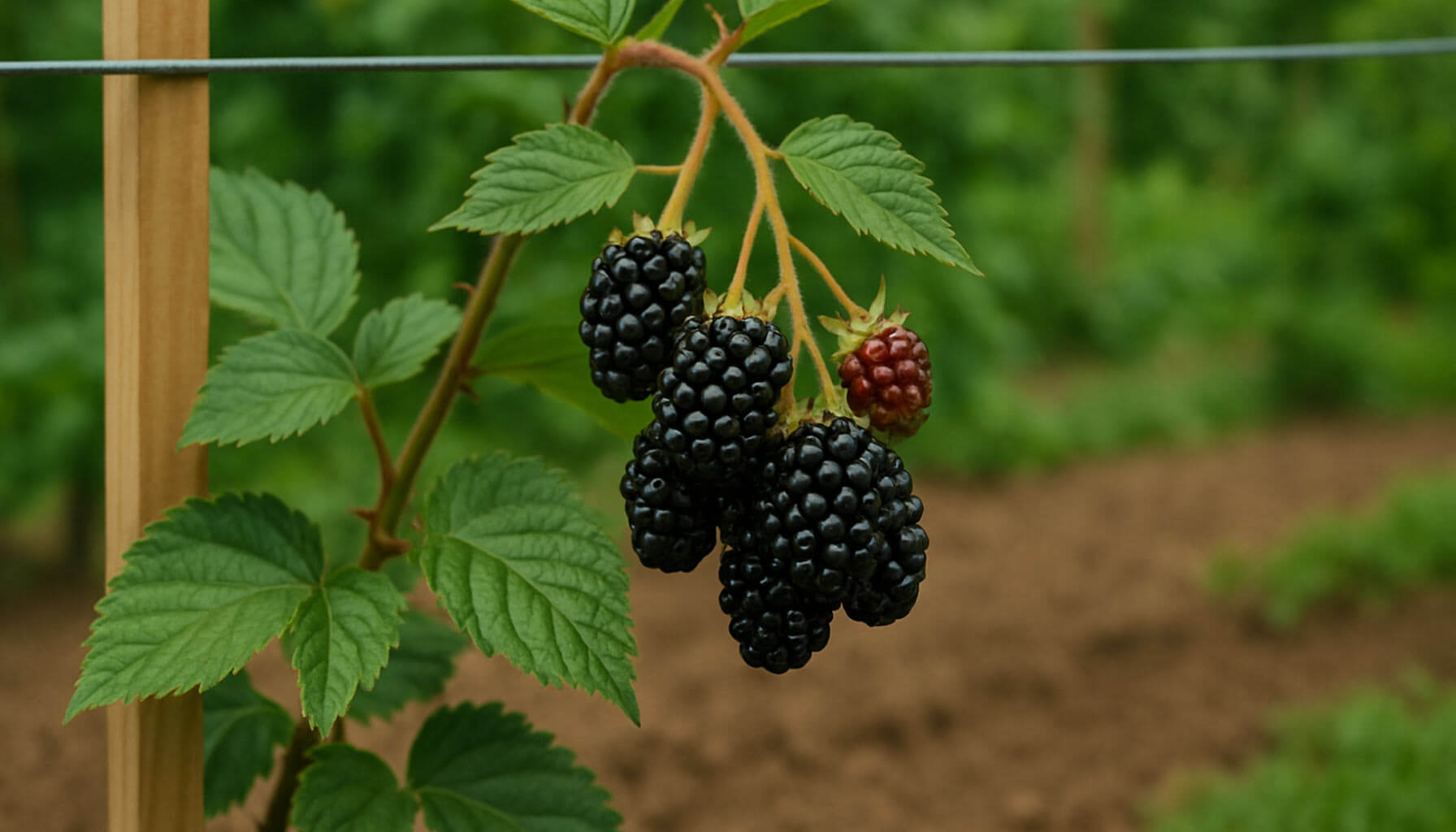
The Joy of Growing Blackberries
There’s something wonderfully British about blackberries. Whether you’re foraging along a hedgerow or training neat rows in the garden, these glossy fruits are a staple of our late summer — sweet, tart, and packed with nostalgia.
Happily, blackberries are also one of the easiest fruits to grow. They’ll tolerate less-than-perfect soil, need very little fuss, and reward you each year with bowlfuls of fruit for crumbles, jams, and pies.
You might already know the wild “brambles” that sprawl through hedgerows and allotment corners. Cultivated blackberries are simply their better-behaved cousins — larger fruit, fewer thorns, and far easier to manage.
Choosing the Right Variety for Your Garden
If you’ve ever been scratched to bits by wild brambles, you’ll be pleased to hear there are thornless varieties that are far kinder on the hands.
- ‘Loch Ness’ – a dependable, thornless variety with heavy crops of firm, glossy fruit. Excellent flavour and perfect for freezing.
- ‘Chester’ – another thornless, late-fruiting type that’s resistant to disease and thrives in most UK regions.
- ‘Arapaho’ – early to fruit and compact, so it’s ideal for smaller gardens.
- ‘Black Cascade’ – perfect for containers and hanging baskets.
If you’ve plenty of space, a traditional thorny variety such as ‘Merton Thornless’ or even a wild-type bramble will produce masses of fruit, but they’ll need taming.
When and Where to Plant Blackberries
Best time to plant: from late autumn through to early spring (roughly November to March), while the plants are dormant. In northern areas, spring planting is safest to avoid frost damage.
Where to plant:
Blackberries love a sunny, sheltered spot, though they’ll still crop in partial shade. They prefer moist but well-drained soil, rich in organic matter. A slightly acidic pH suits them best, so mix in garden compost or well-rotted manure before planting.
Avoid planting too close to raspberries or strawberries, as they share similar diseases. Give each plant around 2–3 metres of space to spread.
Planting and Supporting Blackberry Canes
If you’ve bought bare-root canes, soak the roots in water for an hour before planting. For potted plants, just give them a good drink first.
- Dig a hole wide enough to spread out the roots.
- Set the plant at the same depth it was growing in its nursery pot.
- Backfill with compost-rich soil, firm gently, and water well.
Most varieties benefit from a support system. A simple setup is a series of horizontal wires on a fence or posts, spaced about 60cm apart. As your canes grow, gently tie them in — it keeps them tidy and makes harvesting much easier.
After planting, mulch generously with compost or bark to keep moisture in and weeds out.
Caring for Your Blackberries
Feeding and Watering
Keep the soil moist, especially in dry spells, but never waterlog it. A spring feed of general-purpose fertiliser (such as Growmore or blood, fish & bone) keeps plants vigorous. Top up the mulch each spring to suppress weeds and retain moisture.
Training New Canes
Blackberries send up new canes every year. The trick is to train this year’s growth separately from the old fruiting canes. Many gardeners tie fruiting canes along the lower wires and new canes on the higher ones — simple but effective.
Pruning
This depends on the type you’re growing:
- Summer-fruiting varieties: Cut out the old canes that fruited last year right down to ground level after harvest. Tie in new canes ready for next summer.
- Autumn-fruiting (primocane) types: These fruit on the current year’s growth, so prune them all to the ground in late winter or early spring.
Regular pruning keeps the plant manageable and encourages better crops.
Harvesting and Enjoying Your Crop
Blackberries usually ripen from mid-August through September. They’re ready when they come away easily in your fingers — glossy black, not dull or red-tinted.
You may have heard the old saying that you shouldn’t eat blackberries after Michaelmas (29th September). Folklore claims the Devil spits on them that day — though in truth, it’s just that cooler, damper weather spoils the fruit quickly!
It’s perfectly fine to eat them straight from the bush, but give them a quick rinse if they’re dusty or near busy paths.
To preserve the harvest, freeze berries flat on a tray before bagging, or make jams and coulis to capture that late-summer flavour.
Common Problems and How to Solve Them
Blackberries are hardy plants, but a few issues can crop up:
- Aphids – Small green or black insects that suck sap. Wash off with a strong jet of water or use insecticidal soap.
- Birds – Cover with netting as the fruit ripens.
- Cane blight or rust – Remove affected stems and improve airflow. Avoid overhead watering.
- Rampant growth – Dig out unwanted shoots each spring and, if needed, sink a root barrier (a sheet of heavy plastic or slate) to keep them contained.
If you’ve inherited a patch of wild brambles taking over, cutting them to ground level and repeatedly digging out the roots is the only reliable cure — patience and persistence win here.
FAQs & Fun Facts
Can I grow a blackberry bush from a blackberry fruit?
Not successfully — the seeds won’t come true to type. Buy named canes for predictable results.
How long until they fruit?
Usually, in their second year after planting.
Are wild blackberries safe to eat in the UK?
Yes, just avoid those near busy roads or sprayed hedgerows.
What kills blackberry bushes?
Persistent digging, cutting back, or covering with thick black plastic to starve them of light.
Why don’t shops sell black raspberries?
They’re rare in the UK, with limited commercial demand and a shorter shelf life than blackberries.
Final Thoughts
If you’re after a fruit that’s forgiving, generous, and deeply British, you can’t go wrong with blackberries. Give them a bit of structure, a trim each year, and they’ll reward you for decades.
Few things beat the satisfaction of heading out on a warm August evening, fingers stained purple, a bowl full of glossy berries ready for the crumble dish. That’s real homegrown happiness, no supermarket punnet required.