
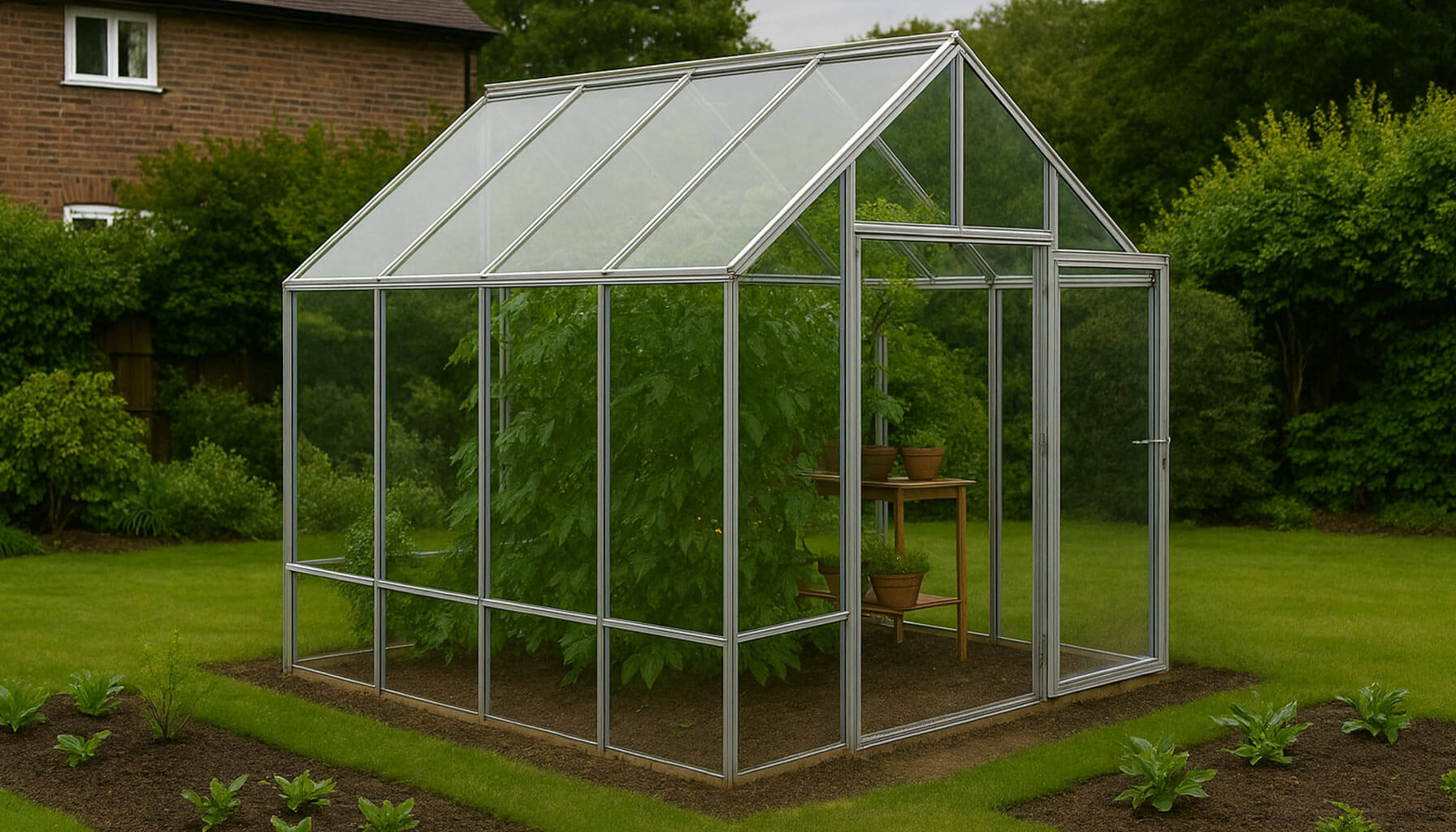
A greenhouse is like an extra season tucked into your garden. Even without heating, it gives you a head start in spring, extends crops well into autumn, and lets you grow things that would otherwise sulk outdoors in the British climate. It also keeps plants sheltered from slugs, pigeons, and those endless summer downpours. You don’t need fancy kit or electric heaters to make the most of one – even a small plastic “mini greenhouse” can transform what you’re able to grow. This guide focuses on the unheated greenhouse, which is by far the most common in UK gardens.
Top 5 Easy Crops for Beginners
If you’re just starting out, these crops are almost guaranteed to reward you:
- Tomatoes – the classic greenhouse crop; reliable and tasty.
- Lettuce and cut-and-come-again salads – quick to grow and harvest.
- Cucumbers – once established, they crop heavily through summer.
- Basil – thrives in the warmth and pairs perfectly with tomatoes.
- Chillies – surprisingly easy, colourful, and productive in pots.
These will give you confidence while you learn the rhythm of greenhouse growing.
1. Getting Started (and Mini Greenhouses Too)
The best time to start using an unheated greenhouse is late winter to early spring, when the days are lengthening but nights are still chilly. Inside, temperatures will be a few degrees warmer than outdoors, which makes all the difference for seedlings.
Essentials:
- Staging or shelves – keep plants off the ground for better light and airflow. Position staging on the north side so taller crops don’t shade smaller ones.
- Pots and seed trays – reusable plastic or terracotta are both fine. Use seed modules for tomatoes and peppers so you disturb roots less when transplanting.
- Fleece or bubble wrap – drape over seedlings on frosty nights to hold in warmth.
- Watering can with a fine rose – young seedlings prefer gentle watering; avoid washing compost out of trays.
- Thermometer – helps you judge just how much warmer your greenhouse is compared to outside.
For mini greenhouses (those zip-up versions often found in smaller gardens and patios):
- Stick to compact crops like lettuce, herbs, chillies, and small tomato varieties.
- Use pots and grow bags rather than planting into the ground.
- Secure them well with ties or weights – a windy day can turn one into a kite!
- Open zips regularly for ventilation; they heat up very quickly.
Above all, set realistic expectations. Without heating, you won’t be harvesting melons in January – but you will enjoy earlier tomatoes, lush basil, and winter salads when neighbours are stuck with supermarket bags.
2. Seasonal Growing Guide
Spring – Getting Ahead of the Season
This is when your greenhouse really earns its keep. You can start sowing tender crops weeks before it’s safe outside:
- Tomatoes (sow late February–March; pot on as they grow)
- Peppers and chillies (best started early, late January–February if possible)
- Aubergines (late winter to early spring)
- Cucumbers and courgettes (sow from late March onwards)
- Salads, radishes, and herbs (parsley, coriander, basil)
A layer of fleece inside the greenhouse adds extra protection on frosty nights. If you don’t have a heated propagator, simply wait until March to sow heat-loving crops – they’ll catch up quickly in the greenhouse. Keep compost moist but not soggy; seedlings hate sitting in cold, wet compost.
Summer – The Greenhouse at Its Peak
By June and July, the greenhouse will be bursting. This is prime time for:
- Tomatoes (cordon or bush varieties)
- Cucumbers (train upwards on strings or canes)
- Peppers and chillies
- Basil (thrives in the warmth)
Tips for success:
- Ventilation – prop doors and windows open to avoid overheating. A max–min thermometer helps spot extreme heat swings.
- Watering – daily in hot weather, sometimes twice on scorching days. Mulch pots or grow bags to stop compost drying out.
- Feeding – start liquid tomato feed once trusses set fruit (about once a week, increasing to twice a week in peak cropping).
- Pollination – gently shake tomato flowers or use a soft brush if insects are scarce.
- Watch for pests – whitefly, greenfly, and red spider mite love greenhouses. Yellow sticky traps and regular misting (to raise humidity) help keep them under control.
Autumn – Making the Most of the Warmth
Your greenhouse will hold warmth long after evenings cool down. Use this to:
- Keep tomatoes, cucumbers, and peppers cropping later (into October in many parts of the UK).
- Sow spinach, rocket, lamb’s lettuce, and hardy salad leaves for autumn/winter harvests.
- Start overwintering onions, garlic, or broad beans in pots.
Also use this time to tidy and prepare for winter:
- Remove old crops before they go mouldy.
- Wash greenhouse glass to let in more light.
- Scrub pots and staging with disinfectant to reduce pests and diseases.
Winter – What Actually Works Without Heat
Don’t expect bumper harvests, but you can still make the space productive:
- Winter salad mixes (sown September–October)
- Spinach and rocket
- Mizuna, mustard greens, and oriental mixes
- Overwintering broad beans and peas in pots, ready to plant out early spring
- Potted herbs (parsley, chives, mint) to keep them usable through winter
- Strawberries – pot up runners in autumn, overwinter in the greenhouse, and enjoy earlier fruit the following spring
Fleece or bubble wrap helps keep frosts at bay. Cloches or small cold frames placed inside the greenhouse add another layer of protection. For many, winter greenhouse use is more about protecting young plants than heavy cropping, but you can still enjoy a steady trickle of fresh greens.
3. Layout & Organisation
A tidy greenhouse grows better plants.
- Staging vs floor – use staging for seedlings and small pots; grow bags or large pots go on the floor. Keep tall crops like tomatoes to the south side if possible, so they don’t shade smaller ones.
- Shelves and vertical supports – maximise space by training cucumbers upwards and using hanging baskets for strawberries or herbs.
- Airflow – avoid cramming plants together. Good spacing reduces pests and diseases.
- Pathways – leave yourself space to water and tend plants easily.
Think of your greenhouse as a small room – arrange it so everything gets light, water, and attention easily.
4. Year-Round Potential
Yes, you can grow something almost every month of the year in an unheated greenhouse – but the focus shifts:
- Spring: early sowings and propagation
- Summer: main crops and harvests
- Autumn: late salads and extending summer
- Winter: hardy leaves, overwintering seedlings, protected herbs
Bubble wrap lining or fleece covers make a surprising difference. Light levels are the real limiter in midwinter, so growth will be slow, but it doesn’t stop you from sowing ahead for earlier crops. For example, sowing salad leaves in September can keep you in fresh greens right through to March if you cut little and often.
Quick-Reference Table – What to Grow When
| Season | What to Sow in Greenhouse | What to Harvest in Greenhouse | Other Uses |
|---|---|---|---|
| Spring | Tomatoes, peppers, aubergines, cucumbers, courgettes, salads, herbs | Early salads, radishes, herbs | Raising seedlings for outdoor planting |
| Summer | Succession sowings of salads, basil, dwarf beans | Tomatoes, cucumbers, peppers, chillies, basil | Drying herbs, saving seeds |
| Autumn | Spinach, rocket, lamb’s lettuce, hardy salads, overwintering beans/peas | Late tomatoes, cucumbers, peppers, autumn salads | Cleaning and preparing for winter |
| Winter | Winter salads, hardy greens, herbs in pots | Small harvests of salads, spinach, herbs | Protecting overwintering plants |
Conclusion
An unheated greenhouse is one of the best investments a UK gardener can make. With it, you can:
- Sow earlier in spring (tomatoes, peppers, salads)
- Enjoy classic summer crops like tomatoes and cucumbers at their best
- Keep things going longer into autumn with spinach and rocket
- Grow hardy leaves and protect young plants through winter
Whether you’ve got a full-sized glasshouse or a small plastic mini version, the principle is the same: extend the season, protect your plants, and enjoy more variety. Start simple, experiment a little, and you’ll soon wonder how you managed without one.