
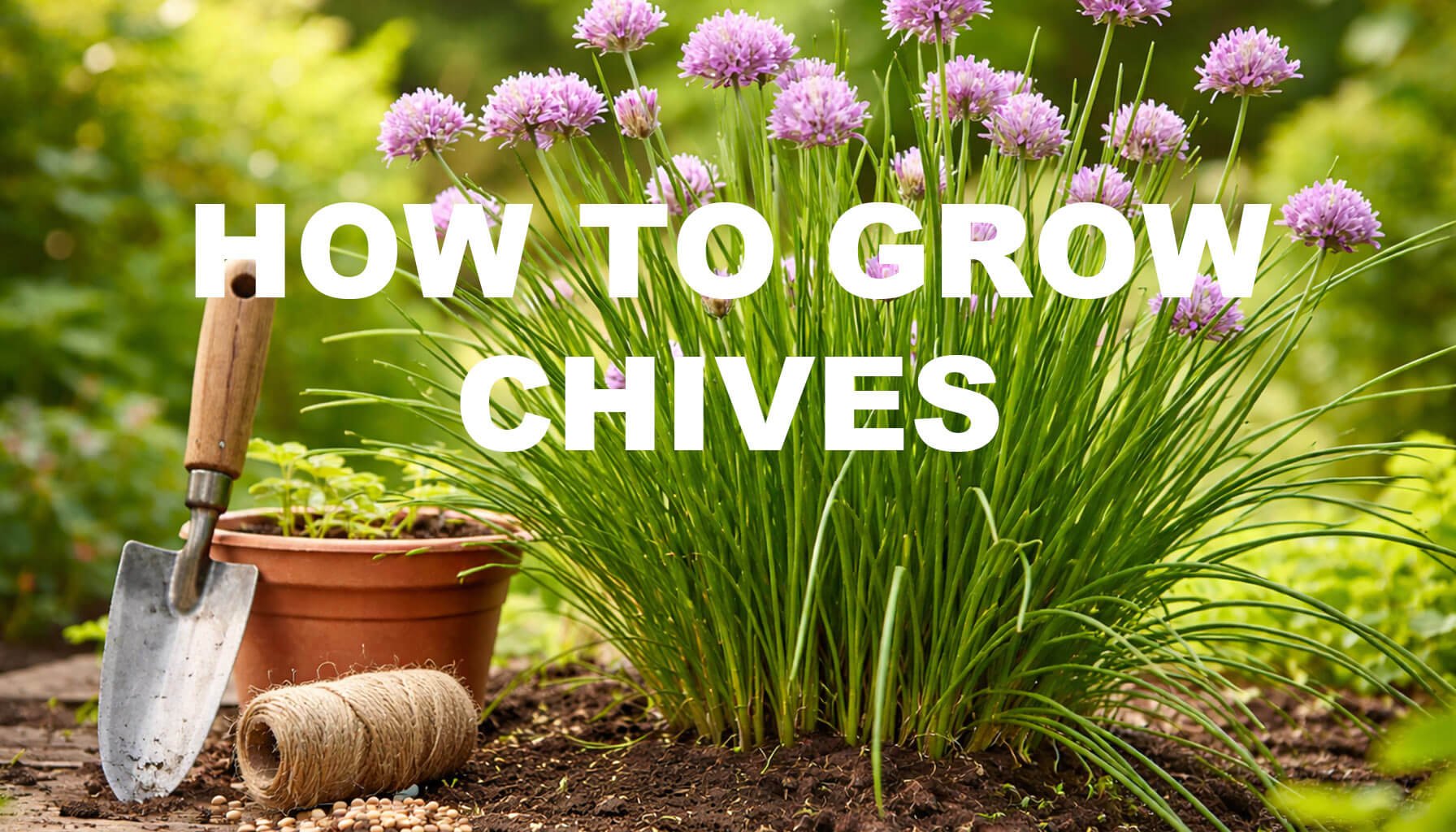
Chives are one of those herbs I always recommend to new gardeners because they survive winter, grow happily in pots, and are often ready to harvest within weeks. They’re forgiving, tidy, and once established they’ll quietly get on with the job year after year. I’ve grown them in borders, pots, old washing-up bowls on allotments, and even on a sunny kitchen windowsill, and they’ve never complained much.
If you want a herb that earns its keep with very little fuss, chives are hard to beat.
What Are Chives?
Chives are a hardy perennial herb related to onions and leeks, but far milder in flavour. You use the leaves rather than the bulb, snipping them fresh as needed for salads, eggs, potatoes, and soups.
Most gardeners grow common chives, which have hollow, grass-like leaves and soft purple flowers in late spring. You may also come across garlic chives, which have flatter leaves and a stronger taste, but common chives are the easiest place to start because they’re hardier, quicker to establish, and better suited to the UK climate.
When to Plant Chives in the UK
If you miss these months, don’t worry because chives are very forgiving and will usually settle in whenever conditions are reasonable.
Chives are very flexible, which is another reason they suit beginners.
- From seed: Sow from March to May indoors or outdoors once the soil starts warming up.
- Young plants: These can be planted almost any time from spring through to early autumn.
Because they’re perennial, once you’ve got them growing you won’t need to replant every year.
Where Chives Grow Best
Chives aren’t fussy, but they do have preferences. I’ve even had them grow quite happily on a lightly shaded, north-facing patio, which shows how adaptable they are.
- Sun: Full sun is ideal, but they’ll cope with light shade.
- Shelter: A reasonably sheltered spot stops leaves drying out.
- Space: They stay compact, so they won’t bully neighbouring plants.
They grow just as happily in:
- Pots and containers
- Raised beds
- Herb borders
- Windowsills (with enough light)
Soil & Compost Tips
Chives dislike sitting in water, which is the most common cause of poor growth.
Chives like soil that holds moisture but doesn’t stay wet.
- Use multi-purpose compost for pots
- In the ground, improve soil with a bit of garden compost
- Avoid waterlogged clay — raised beds help here
They don’t need rich feeding, but poor, dusty soil will give you thin, weak leaves.
How to Grow Chives (Seeds vs Plants)
If you’re deciding between seeds and plants, seeds are cheaper but slower, while young plants cost more upfront and give you harvests much sooner.
Growing Chives from Seed
- Fill a small pot or tray with compost
- Scatter seeds thinly on the surface
- Cover lightly with compost
- Water gently and keep moist
- Germination usually takes 10–14 days
Once seedlings are a few centimetres tall, thin them out or plant small clumps where they’re going to grow.
Growing from Shop-Bought Plants
This is the quickest and easiest option.
- Split the pot into smaller clumps
- Plant them out or pot them up
- Water well for the first week
They’ll usually settle in straight away.
Caring for Chives
Chives are low-maintenance, but a little care goes a long way. In winter, growth slows right down, so they need much less water.
- Watering: Keep soil lightly moist, especially in pots
- Feeding: Not essential, but an occasional liquid feed helps in containers
- Tidying: Remove old or yellow leaves to keep plants fresh
If they flower, don’t panic as they’re still perfectly healthy.
Growing Chives in Pots
Chives are excellent container plants and often do better in pots than in the ground. Just be aware that pots dry out much faster in hot or windy weather, so they may need watering every day during summer.
- Choose a pot at least 15cm wide
- Make sure it has drainage holes
- Water more often in summer
Pots are ideal if you want chives close to the kitchen door for quick snipping.
Harvesting Chives (So They Grow Back)
Regular cutting doesn’t just keep plants productive — it also helps improve flavour and keeps the leaves tender.
Yes — chives do grow back after cutting, as long as you harvest them properly.
- Snip leaves with scissors
- Cut down to about 2–3cm above soil level
- Never remove more than a third of the plant at once
Regular cutting actually encourages fresh growth, so don’t be shy.
Do Chives Come Back Every Year?
They certainly do. Chives are fully hardy in the UK and will die back over winter, then reappear in spring.
Every few years, clumps can get crowded. If growth weakens, simply lift and divide them in early spring — instant new plants.
They spread slowly, so they won’t take over the garden unless you let them self-seed freely.
Companion Planting & Pests (What Really Works)
Chives are often said to repel pests. In truth, they may help a little, but they’re not a magic shield.
- Slugs: Generally leave chives alone
- Squirrels: Not usually interested
They do work well planted near carrots, lettuce, and roses, and their flowers are brilliant for pollinators.
Common Chive Problems
Most chive problems are caused by too much water or overcrowded clumps, rather than pests or disease.
- Yellow leaves: Usually lack of water or poor drainage
- Weak growth: Soil too poor or clumps too crowded
- Flowering too early: Normal — cut back after flowering to refresh growth
Overall, problems are rare, which is exactly what beginners want.
Final Thoughts
If you’re new to growing herbs, chives are one of the safest bets you can make. They’re hardy, useful, and forgiving. Once planted, they’ll quietly reward you for years.
If I had to choose just one herb to recommend to a first-time UK gardener, chives would always be near the top of the list. If you’ve been thinking about giving them a go, plant a pot this spring or tuck a small clump into a sunny corner and you’ll be cutting fresh chives before you know it.